Tina Franke · 8 November 2026
Frostvale's Traditional Ice Cellars Draw Renewed Interest for Sustainable Food Storage Solutions
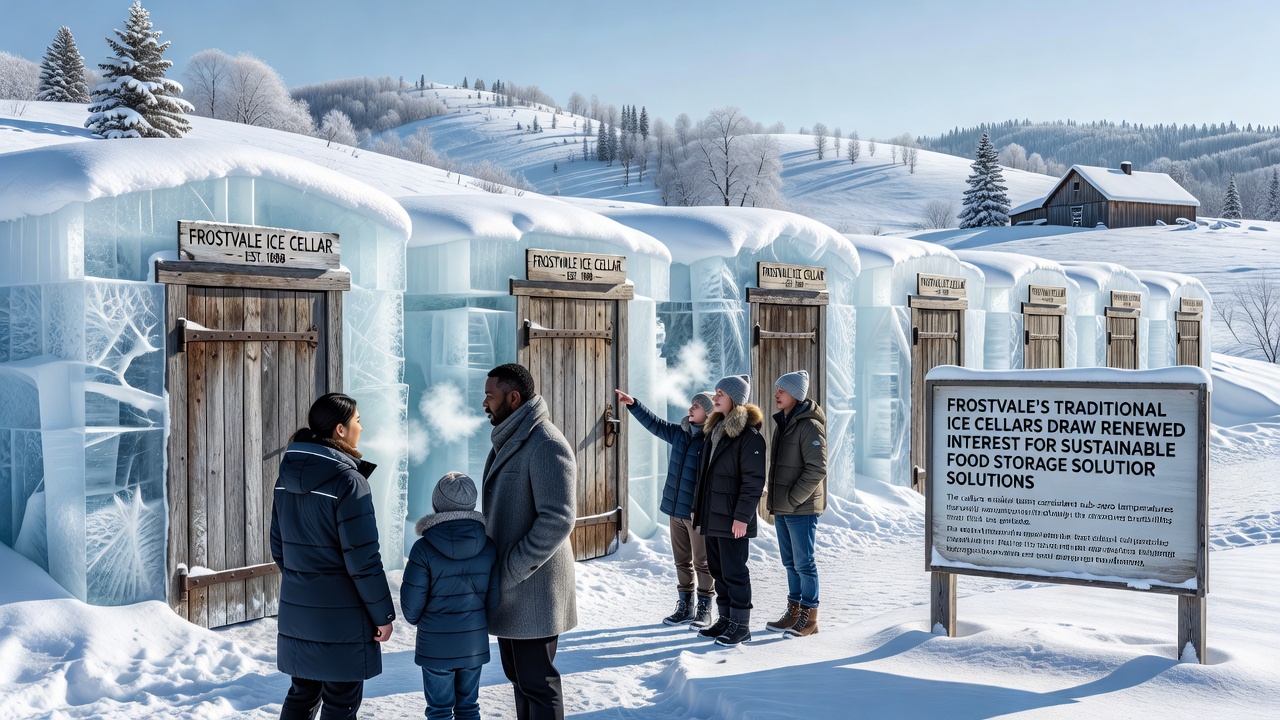
Frostvale's historic ice cellars have operated for generations as underground chambers that rely on packed snow and ice blocks harvested during winter months to maintain consistent low temperatures for food preservation throughout the year, and recent developments in November 2026 show growing adoption among local farms and households seeking alternatives to electric refrigeration systems.
These structures typically consist of deep pits lined with stone or timber and covered with thick layers of earth and straw for insulation, while the ice itself comes from nearby ponds or rivers that freeze solid each season. People in the valley have maintained these methods since the late 1800s when commercial ice harvesting supplied markets across the region, yet the practice declined sharply after widespread electricity access arrived in the 1950s.
Mechanics Behind Traditional Ice Cellar Performance
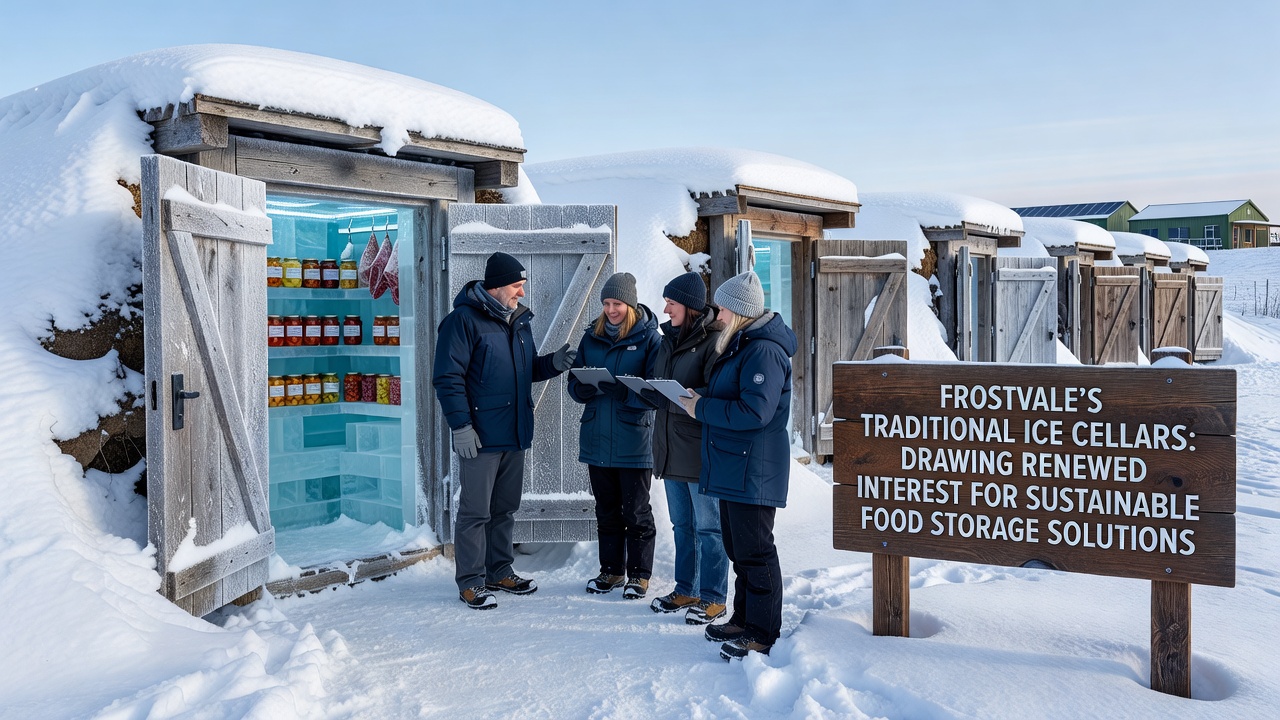
Researchers from the University of Calgary documented how properly constructed ice cellars sustain temperatures between 0 and 4 degrees Celsius even during summer peaks, and their findings reveal that the combination of thermal mass from surrounding soil plus the latent heat properties of melting ice creates stable conditions without any external power input. Maintenance involves annual ice replenishment in late fall, removal of any accumulated meltwater, and periodic checks for structural integrity in the wooden support beams.
Local records indicate that cellars built before 1920 often feature ventilation shafts positioned to draw cool air downward while expelling warmer air upward, and this passive airflow prevents moisture buildup that could spoil stored produce or meats. Families who continue the tradition report storing root vegetables, preserved fruits, cheeses, and game meats for periods exceeding six months with minimal spoilage rates when ice levels remain adequate.
Factors Driving Interest in November 2026
Data compiled by Natural Resources Canada shows rising electricity costs for rural refrigeration across northern communities, and this economic pressure coincides with increased awareness of the carbon footprint associated with conventional cooling equipment. In Frostvale specifically, several farms began restoring long-abandoned cellars during the summer of 2025 after observing successful pilot projects in neighboring valleys, and by November 2026 at least twelve additional households had initiated similar renovations.
What's interesting here is how the renewed activity aligns with broader discussions around energy resilience, because ice cellars require no fuel deliveries during winter storms and function independently during power outages that sometimes last days in the region. Community workshops held at the Frostvale Valley Resource Center in early November 2026 attracted over eighty participants who learned basic construction techniques and ice harvesting safety protocols directly from longtime practitioners.
Comparative Analysis With Modern Storage Methods
Studies conducted by the Commonwealth Scientific and Industrial Research Organisation in Australia examined energy consumption patterns for food storage in cold climates, and those reports indicate that traditional ice-based systems can reduce annual electricity demand for cooling by up to seventy percent when scaled appropriately for household or small-farm use. Observers note that modern chest freezers and walk-in coolers deliver precise temperature control and convenience, yet they depend entirely on continuous grid power and require regular maintenance of compressors and refrigerants.
Frostvale residents who operate both systems side by side often mention that ice cellars excel at bulk storage of items that tolerate slight temperature fluctuations, while electric units remain essential for items requiring sub-zero conditions or frequent access. The reality is that hybrid approaches have emerged where cellars handle long-term root crop storage and electric refrigerators manage daily perishables, and this combination appears in several working farms documented during the 2026 harvest season.
Challenges and Practical Considerations
Restoration work demands physical labor to clear debris and reinforce walls, and sourcing sufficient ice each winter requires access to clean water bodies that freeze reliably. Climate variability has affected ice thickness in recent decades, prompting some users to supplement natural ice with commercially produced blocks delivered from higher elevation sources. Training programs organized through the Frostvale Agricultural Cooperative emphasize proper layering techniques to avoid contamination and structural collapse risks.
Those who've studied historical records point out that ice cellars once supported entire communities before mechanical refrigeration existed, yet contemporary regulations around food safety now require documentation of storage temperatures and sanitation practices that traditional operators must adapt to meet. Local health authorities in November 2026 issued updated guidelines that recognize ice cellars as acceptable for certain non-perishable categories when operators follow established monitoring procedures.
Conclusion
Frostvale's ice cellars represent a practical link between historical practices and current sustainability priorities, and their documented performance characteristics continue to attract attention from individuals and organizations evaluating low-energy food preservation options. Continued monitoring through 2027 will clarify how many additional sites undergo restoration and whether the trend sustains beyond initial enthusiasm driven by energy cost considerations.